
Using Your Scooter
Plain-language instructions for the Vive Health MOB1027. Every step is written out below.
Driving the scooter
Setting the seat, powering on, and getting moving.
A 2-minute overview from Vive covering the controls and charging.
- Set the seat. Lift the lever under the right side of the seat, turn the seat to face forward, then let go of the lever. Give the seat a tug to be sure it locked.
- Put the key in and turn it to the right.
- Set the speed dial. The turtle is for indoors and crowds, the rabbit is for open sidewalk. Start on the turtle until you have the feel of it.
- To go forward, push the right-hand paddle on the handlebar. To back up, push the left-hand paddle. The harder you push, the faster it goes.
- To stop, let go of the paddle. The brake comes on by itself.
The horn is the red button on the left and the headlight is the red button on the right. One rider at a time, up to 265 lb.
Charging it overnight
Plug it in every night. A full charge takes 10 to 12 hours.
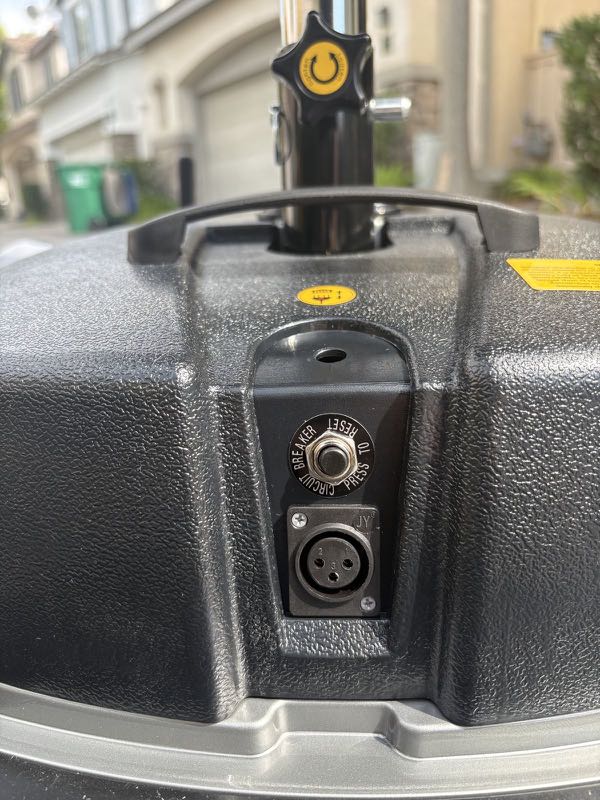
- Turn the scooter off and take the key out.
- Lift the rubber flap on the front of the battery box.
- Plug the three-pin connector into the scooter first, then plug the charger into the wall.
- A red light means it is charging. A green light means it is nearly there — give it another hour or two.
- From empty, a full charge takes 10 to 12 hours.
This battery cannot be topped up quickly the way a phone can. Charging overnight, every night, is the whole plan — do that and you will not be caught short.
It won't move
Nearly always the free-wheel lever. Start there.
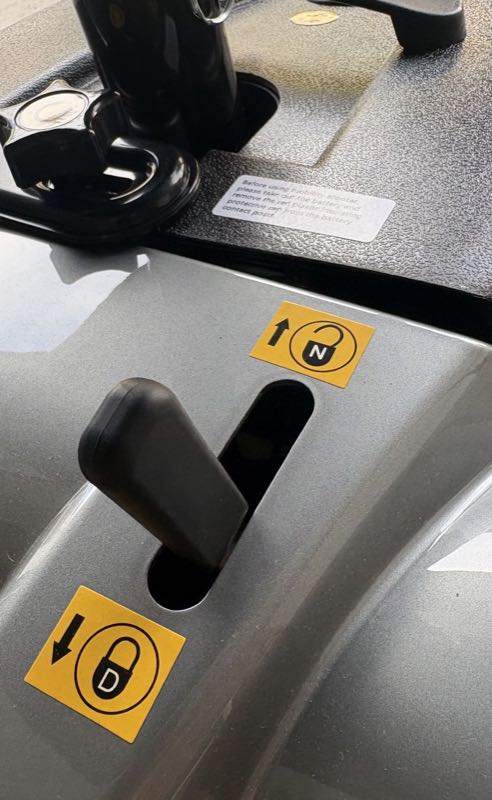
- Check the black lever beside the rear wheel. Two yellow decals mark it: D with a closed padlock, and N with an open padlock. It has to be in D. In N the motor is disconnected so the scooter rolls freely — this is by far the most common cause.
- Make sure the key is turned on.
- Look at the battery gauge. If it is in the red, plug it in and charge it.
- Lift the flap on the front of the battery and press the round Overload Protector button. Wait about a minute, then try again.
Still not moving? Call us at (949) 232-0150. We will come to you and take care of it — there is nothing else you need to try.
Taking it in a car
It comes apart in a few minutes — most people find this easier with a second pair of hands.
An 18-second clip from Vive showing this same method: seat off, battery out, tiller down, then lift the base. It does not cover putting it back together — the steps below do.
- Take the seat off.
- Lift the battery out.
- Fold the tiller down.
- Lift the base into the car. It is the heavy part — a second pair of hands may be safest.
- Leave the base in one piece. It can technically be split in two, but taking that apart and getting it back together can be tricky.
Putting it back together correctly is critical. If the seat or battery does not sit firmly, call (949) 232-0150 before anyone rides.
The full owner's manual
Vive Health 4-Wheel Mobility Scooter User Manual (opens in a new tab)Published by Vive Health. Provided to renters for reference.
A few limits worth knowing
- One rider at a time, up to 265 lb. Never carry a passenger.
- Smooth pavement and indoor floors only. Sand, gravel, and grass will stop it.
- Gentle slopes only — up to 6 degrees. Steep driveways and hillsides are too much for it.
- It clears about 1.5 inches. Treat every step and curb as needing a ramp.
- Keep it dry. No rain, no puddles, and never hose it down.
- Light items in the basket only.